Let me start off by saying that if you want to know all the latest news (good or bad) about AI in the writing world, or the creative/art world in general, there are tons of resources out there. One of my favorites is Writer Beware, which specializes in scams and other threats to writers, and she often covers AI related news. You can also check out author Kristen Lamb’s blog—she recently wrote a post about AI. So this post is primarily my personal opinion, as well as my personal habits as a writer in a rapidly-changing world.
I do not use AI in my writing. I do not collaborate with AI to generate ideas, write text, or even polish and edit my work. (If spell-check is now considered AI then I guess I do use that, but I have never used anything more advanced than that). My books, blogs, social media posts, and newsletters are all fully and completely written by me—and all em-dashes and semi colons are my own, fully organic work, thank you very much! 😉
Use the Tool Properly
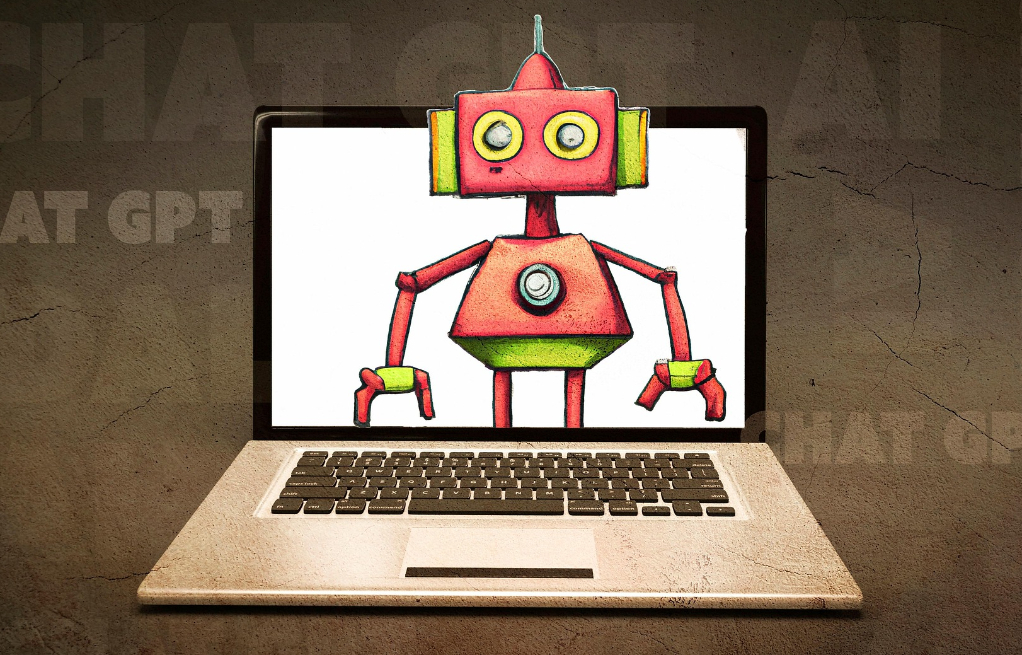
Now, I am not telling you whether to use AI or not, nor do I judge any writer or artist who uses it as one of their tools in their arsenal. Because AI is just that—a tool. It’s the next advanced version of tools we’ve always had. Need to look up a quick fact? Ask AI (just like we’d use Google/Wikipedia, or a physical encyclopedia not so very many years ago). Need help with brainstorming or idea prompts? AI can help with that—it’s a more adaptive version of drawing mind maps or looking for mood boards on Pinterest. But like any tool, it can be misused.
A car is a much more effective tool for traversing long distances quickly than a horse and carriage or walking on foot. But if not properly controlled, a car can cause great damage to both the operator and others (often accidentally, but both negligence and malice can contribute to the misuse of and damage created by this tool). I believe that AI is the same way. If not properly controlled, it can cause great damage: on a small scale, by reducing a person’s critical thinking skills or desire to put in the hard work of creative pursuits, or on a larger scale. We’ve seen some of this damage already, with AI-generated books flooding ebook platforms and reducing visibility and royalties for people who actually wrote their own books.
AI isn’t Going Away
But whether you support AI (in any form) or oppose all of it, it’s not going away. Like the emergence of the internet and online shopping 20-some years ago, or the rising popularity of cars 100-some years ago—some people were excited about the potential, some people feared the demise of society as they knew it, and some people scoffed and said it wouldn’t last. And just like with the invention of cars and the internet, I believe AI is here to stay and will indeed change many aspects of our society—for good and bad.
I believe that us writers and creatives need to accept that AI (in some form) is here to stay. And it will probably continue to change (rapidly) over the next few years. The choice to use it as a tool or to participate in the changed aspects of society that result from AI use should remain a personal choice. Those who use it should respect those who don’t—and vice versa. It isn’t going away, so we all need to get used to the existence of AI.
AI will Never Replace Human Will or Creativity
Now to address my click-baity title: are writers going extinct? No, I don’t believe that writers (or other artists/creatives) will become a vanishing breed. It’s true that right now artists of all disciplines are fighting against a rising tide of fully AI-generated stuff that claims to be fully human created. And fighting against the opposite: people crying “that’s AI” at a computer-enhanced picture conceived of and painted or photographed by a human; or “that’s AI” at a book that has a predictable plot or uses em-dashes and semi-colons. (If dashes and semi-colons are all it takes to “prove” something is AI, then I might be in trouble—those are my favorite punctuation marks. Just look at how many are in this blog post alone!)
The human need for freedom of thought, expression of creativity, and the will to overcome will always be there. Over the past several thousand years of recorded history, humans have faced far worse threats to our freedom and creativity than adaptive computer programs. Yes, there’s currently a lot of “AI slop” out there in the literature and art world that can confuse people and makes it hard to find the real stuff. Yes, there’s many young people growing up with low mental discipline or critical thinking skills, believing that AI can solve all their problems and do their thinking/creating for them. And yes, these aspects of cultural change will likely have very negative repercussions in the coming years.
But it’s not the end of culture or society or creative humans. Humans and our societies are by nature organic and ever-changing—that’s just life. The human will and creativity is something that does not change, however—we must always think and we must always create, because that’s what we were designed to do. So I, for my part, intend to keep on writing and creating, and I look forward with interest to see where the future takes me.
Like what you’re reading? Buy me a lemonade!

 StorytellerGirl