World-Building Tips: Creating a Magic System – Part 2

In my previous blog post, I went over some simple world-building tips for anyone writing fantasy who is creating a magic system for their world. No matter how unique you want to make your fictional world, things within the story should follow the rules of the world you’ve built. This creates consistency and helps build trust with the reader; this makes your story more believable, no matter how fantastical some elements may be. 

There are a few more basic concepts that I think can help writers to build the structure of magic within their fantasy world. Answering these questions can help you think more deeply about how you want magic to work in your story. 

Societal View of Magic 

How does the society of your world view magic? Is it just an everyday thing, or reserved for special people or special occasions? Is it viewed positively or negatively, or kept a secret? A society that casts spells with the same casualness and frequency that we check our smart phones would be very different from a society that hunts down magic users and puts them in prison. The cultural ideals regarding magic should be a huge element in your worldbuilding. 

Continue reading

World Building Tips: Creating a Magic System – Part 1

For the next couple of posts, I’m going to discuss some simple world-building tips for anyone writing fantasy who is creating a magic system for their world. No matter how unique you want to make your fictional world, things within the story should follow the rules of the world you’ve built. This creates consistency and helps build trust with the reader; this makes your story more believable, no matter how fantastical some elements may be.

There are a few basic concepts that I think can help writers to build the structure of magic within their fantasy world. Answering these questions can help you think more deeply about how you want magic to work in your story.

Continue reading

Fairy Gardens

Recently I discovered that one of my neighbors has been bringing his passion for art, magic, and eclectic fun to his yard. Every day when I go on a walk, his yard is a little bit different: a new fairy statue, a new little toy hidden in the crook of a tree branch, a toy castle or a yellow brick that finds a new spot in the yard each day.

My friend and fellow writer Bonnie Watson was visiting the other day, and I wanted to show her my neighbor’s yard. She blogged about it, and included far more lovely photos than I’ve managed to put in my post. It’s interesting to note that up until this point, I had never met my neighbor. I knew that he (or she) had to be a kindred spirit. Well, the owner happened to arrive home just as Bonnie and I were taking photos of his yard, so he came out to greet us.

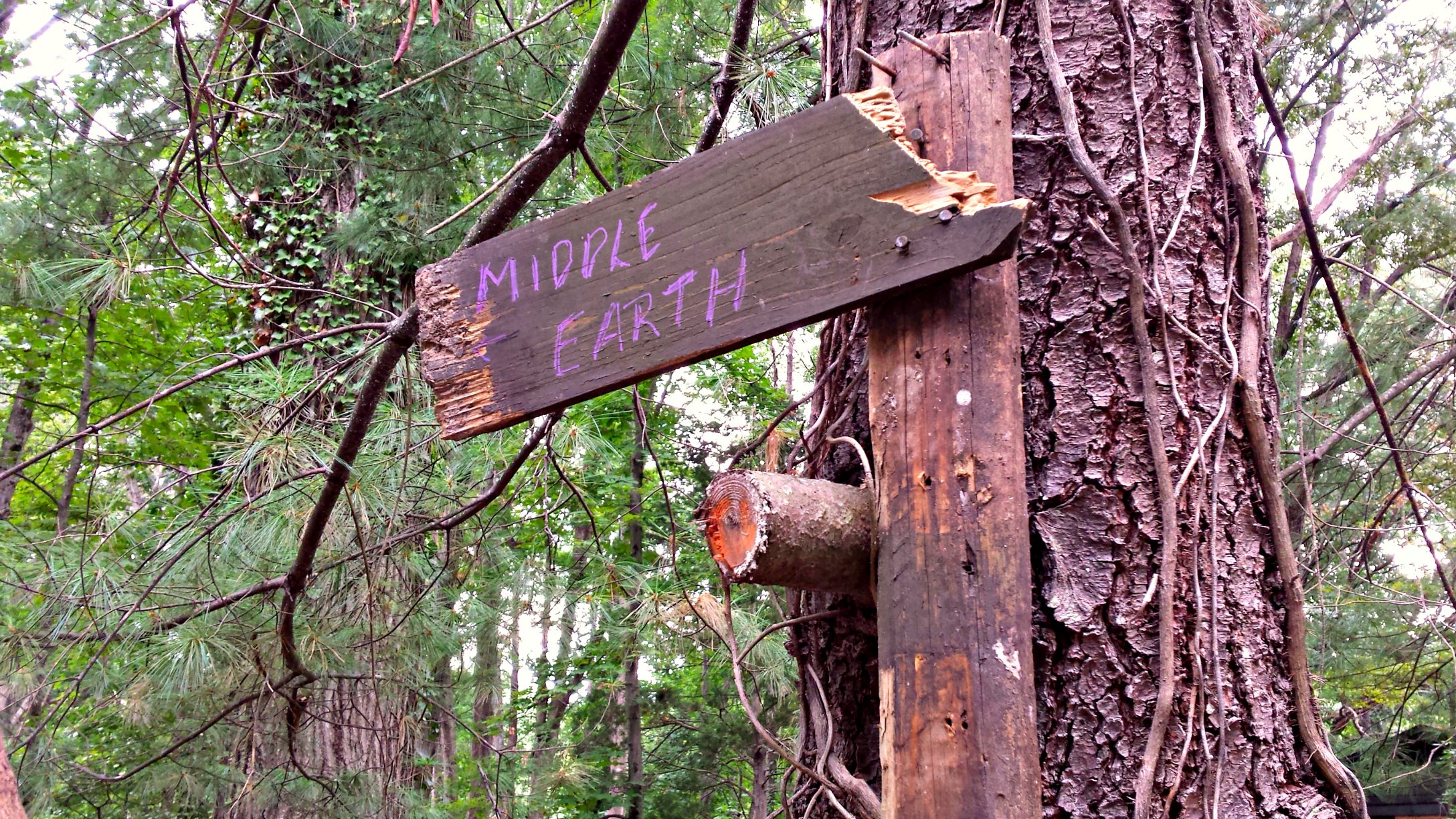
This sign is a recent addition, and lets you know to expect the unexpected if you follow the path into the woods

This sign is a recent addition, and lets you know to expect the unexpected if you follow the path into the woods

He took us through his entire yard, showing us all the treasures that he’s collected over the years of life, and other items that he’s dug up in his own yard. Apparently his property was used as a trash dump before the house was built, and so for an amateur treasure-hunter like he is, it’s a gold mine.

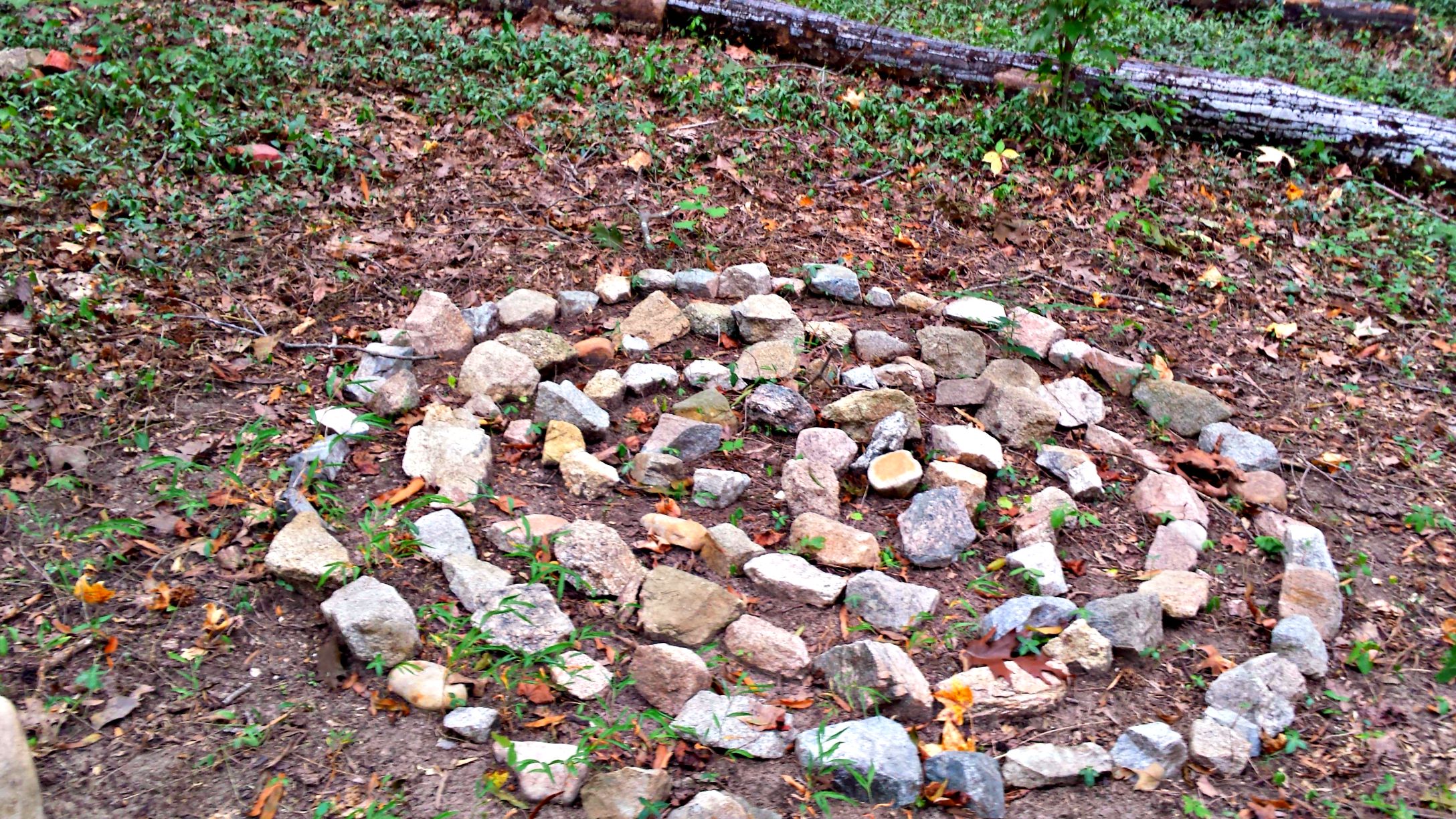
So many beautiful rocks – all dug up from his yard – arranged to transport you to a time of prehistoric magic and mystery

So many beautiful rocks – all dug up from his yard – arranged to transport you to a time of prehistoric magic and mystery

His entire lot is heavily wooded and left semi-wild, with treasures both natural and man-made scattered about. One day I want to have a yard like this – a life-sized fairy garden with new surprises to discover every day.

the path at the edge of the yard, with a thoughtful little bridge to span the ditch at the edge of the road

The path at the edge of the yard, with a thoughtful little bridge to span the ditch at the edge of the road

I’m working on the beginnings of such in my own yard. I’ve cleared a little spot at the edge of the woods, and I’ve got the beginnings of a fairy garden going (it’s fairy-sized, but I do have a human-sized bench in the clearing). It’s not much, but it’s my own little spot of magic.

Fairies like pine trees and moss

Fairies like pine trees and moss


Questions for Readers

This post is a poll of sorts, and I really would love your feedback! (It’s only three questions, and you don’t have to answer them all, so don’t panic). These are few things that I’ve been mulling over lately as I’ve been working on my fantasy stories, and I’d really like to know what other people think about these things. My questions are directed mainly at readers of fantasy and related genres. I welcome feedback from readers (and writers!) of any genre, but fans of fantasy/sci-fi/paranormal would probably understand these questions best.

So, here we go:

Do you prefer one-shots, duology/trilogy, or series?

I’m not trying to find the “best” or even the most currently “marketable” length – I’m just genuinely curious what other people are reading. And I’m honestly not sure which one is my favorite. So what’s your preference?

Do you like to have foreign languages translated in the text, or just have it left up to the reader to figure out words from the context?

This isn’t really about conlangs (constructed languages, like Elvish or Klingon), although that could be a subject for a blog post all on its own. When a character is speaking in another language (one different from the point of view character’s primary language) I’ve seen several different methods used:

The writer puts the character’s dialogue in brackets instead of quotes – [I bring you my sword], said Vlen – to indicate the language change. Or—

The writer simply states the language switch: “I bring you my sword,” said Vlen in Elvish. Or—

The writer has constructed at least the basics of the language, and uses it, with or without a translation as part of the narrative: “Mdash nii hwena,” said Vlen. I bring you my sword.

Have you read books – or written books – using one of these methods? Or a different method? Do you have a favorite? What method of inserting other languages seems the most awkward or interrupts the flow of the story?

Do you love or hate a book with a glossary or appendix?

Many fantasy books have landscape maps or genealogical maps, often at the beginning of a book. But what about other stuff that might come at the end of a book, like a glossary of conlang terms, a pronunciation guide, or an appendix explaining a cultural history or technological specs? Do glossaries and appendices get you excited about learning “behind the scenes” stuff about the world of the book, or do you get bogged down because it feels like a textbook?


Thanks! I truly want to know what others think about these storytelling elements. I look forward to reading everyone’s answers!

Naming Your Characters

I’ve read a lot of blog posts about how to name your characters. I even wrote a post about it a while back, which you can read here on the Mythic Scribes website. I don’t know that there’s one right or wrong way to come up with names for characters, and there are different tips and tricks that vary depending on genre. (My post on Mythic Scribes is about inventing names for fantasy. That article probably won’t help you much if you’re writing contemporary women’s lit.)

So how do you come up with good character names? Well, here are a few suggestions that are not so much tips and tricks, but are ideas to consider when you sit down to populate your story with characters.

Consider your genre. If you’re writing science fiction or fantasy, then you might be able to get some ideas from that post I wrote for Mythic Scribes. (If you do read that post, then scroll down and read the comments – lots of good ideas there.) If you’re writing historical fiction, then do your research and choose names that fit with the time period and location. It wouldn’t do to have a character named Jessica in a story set in ancient Rome (unless, of course, you’re doing a sci-fi time-travel story).

Consider symbolism or meaning of names. This is a common thought process behind the naming of characters – at least from what I’ve read on blogs and heard from other authors. Depending on your genre and the story itself, you can go heavy-handed with the symbolism and meaning – for example, like J.K. Rowling and her name for Remus Lupin. If you know anything about mythology and/or the Latin and Greek roots of words, his name is a dead giveaway that he’s somehow related to dogs or werewolves. Symbolism in names can also be more subtle, such as naming a strong male character after your beloved grandfather, even if the character is not based on him. Some authors want a name that has a particular meaning, which may or may not figure directly in the story. Baby name books are a great resource if you’re looking for meaning or symbolism in your names.

Use humor or in-jokes with your names, if appropriate. This one really depends on the genre and the type of story you’re trying to tell. A comedy might benefit from pun-like names or names with a certain humorous meaning behind them. This may not be the best example, but in the fantasy series I’m writing, I have a character whose last name is Abernathy. This in itself is not funny (nor are the stories supposed to be funny), but I use his last name for (very occasional) humor within the tale. The books are set in Finland, and all of the main characters (with the exception of Mr. Abernathy) are Finnish. I deliberately picked a name that would be challenging for native Finnish speakers to pronounce. This is an incredibly minor point in the books, but I thought it would be fun to toss in elements of other characters occasionally mangling his name.

Scroll through the phone book or pick a Scrabble tile from the box. Did I just say phone book? I feel old now. Well, hopefully you get the idea. This is the “random selection” idea of generating names, and could work if you are totally stuck for ideas, or if you just need a quick name for a minor character and don’t need to put a lot of thought into it.

Now over to you – do you have any ideas or special techniques for naming characters in your stories?