Work In Progress #Blog Hop – The Next Big Thing

I found this post on friend and author Tina Glasneck‘s blog, so I’m giving her props for this, and copying it to try myself. It’s not a real interview, in the sense that there is some famous interviewer asking me questions (that will come one day soon, I hope!) But this is a nice set of questions that can shed some light on what I’m working on, for anyone interested in the novels that I’m writing.

Rules:

~Answer the ten questions about your current WIP (Work In Progress) on your blog

~Tag five other writers/bloggers and add their links so we can hop over and meet them.


TEN INTERVIEW QUESTIONS FOR THE NEXT BIG THING:


What is the working title of your book?
I’m working on book two of a trilogy called The Light-Whisperers of Kalevala. This particular book doesn’t have a title yet.

Where did the idea come from for the book?
I finished the first draft of book one, and decided that the story needed a continuation. As for ideas for the story in general, several of my other blog entries refer to my sources of inspiration.

What genre does your book fall under?
Fantasy. More specifically, cross-world fantasy (where the characters travel from this world to another realm), with perhaps a few elements of urban fantasy.

Which actors would you choose to play your characters in a movie rendition?
I don’t have any specific actors in mind at the moment, but if a movie were to be made of this trilogy, I would want actors native to the area where the book takes place (northern Scandinavia).

What is the one-sentence synopsis of your book? 
It’s still very early in the story-telling process and I’m creating a lot as I go, so this will change soon—but right now, my one-sentence synopsis would be: War is brewing—war that threatens not only Pohjola, but Earth, as well. Yeah, I need to work on that one-line synopsis a little bit more…

Will your book be self-published or represented by an agency?
Haven’t decided yet.

How long did it take you to write the first draft of your manuscript?
Book one took me almost two years to write the first draft—I’m now in the editing phase of that one. Book two I’ve been working on for a month or two, and I’ve got about 10,000 words so far.

What other books would you compare this story to within your genre?
I’d say The Chronicles of Narnia by C.S. Lewis, and Phillip Pullman’s His Dark Materials series.

Who or What inspired you to write this book?
So many things are sources of inspiration for me. For this trilogy, my love of Finnish mythology and folk music were big parts of my brainstorming sessions.

What else about your book might pique the reader’s interest? 
For lovers of fantasy series, this will be a trilogy with possible companion books, as well. For those who prefer a stand-alone tale, each of the three books is being written as a single story. I think it would appeal to anyone who likes a fantasy story with real-world elements, or anyone who likes a story with an exotic setting. Basically, I’m writing the sort of story that I would love to read, and I hope others will, too!

And now I’m tagging some other writers! Check out their blogs–whether they do this little questionnaire or not. You know you want to!

Writability blog

Kim Murphy

Bonnie Watson

Darkness and Light

This blog entry doesn’t have a point—at least as far as useful insights or advice might go. This time I think I’ll just share my musings about two of my favorite songs (I have a lot of favorites, actually, but I’ll talk about just two here). I blogged a few weeks ago about music, how I use it in conjunction with my writing and so on—you can read it here, and I’ll try not to repeat myself for this post.

I titled this post “Darkness and Light” because of two songs that I’ve been listening to a lot lately, and that I find very inspirational for the novel that I’m working on. It also could serve as an analogy for the worlds in my fantasy novel. One country, called Pohjola, is a land of light—peace, happiness, and abundant light in the sky. The other land is called Ice-Dark, and it is appropriately dark—that’s where the bad guy lives, and there’s no sun or moon.

The “dark” song that I’m putting in this blog isn’t actually dark as in evil. It’s really about the positive side of darkness, both physical and poetic or philosophical darkness. One of my favorite lines, that I find especially inspiring for myself as a writer, is: “Imagining places that I’ve never seen, the morning of life and the end of all dreams…”

The song “Mercy of Darkness” is by Eivør Pálsdóttir, a brilliant singer and songwriter from the Faroe Islands. She has a version of this song in her native language as well, but I’ve put the English version here, gambling that more of my blog readers speak English than Faroese.

The “light” song is about actual light, as well it being a love song of sorts (at least that’s my interpretation). The title “Iđitguovssu” translates as “Dawn Light.” The singer, Máddji, is a Sami from Norway. As I mentioned in my previous post about music, part of my book takes place in Lapland or Samiland, and some of my characters are Sami.

I also happen to just really like Sami music, whether it be the traditional yoiks or the more modern music infused with flavors from other cultures.  This particular song just relaxes me, and if I’ve had a hectic day it helps to put me into a frame of mind for writing.

Does anybody else have a favorite “writing” song that provides you with comfort, inspiration, or just plain joy? Please share!

Olympics, London, and Other Stories

I’m not really into sports at all, but I love watching the Olympics. I especially love the stories of the Olympics—athletes overcoming odd to get to the games, last-minute surprises and underdog victories, picking up and moving on when defeat hits.

Watching these past games in London brought to my memory the trip I took last year to visit London. The trip had nothing to do with the Olympics (I was just visiting a friend) and I was in a different part of the city, so the only evidence of the upcoming games that I saw was an Olympic count-down clock in Trafalgar Square.

But just like the Olympics, my personal experiences in London were full of stories. I might blog about it in more detail in the future—I could do an entire blog post alone on just the ancient Egypt exhibit at the British Museum, but for now I’ll just post one picture:

Part of an ancient Egyptian wall relief. Still pretty colors, after thousands of years!

There were plenty of little memorable moments that I could easily turn into a blog post, or even use as a prompt for a fictionalized story—like our mad dash through King’s Cross Station asking anybody we could where Platform 9 ¾ was, or my attempt at eating so-called B-B-Q chicken at an Italian restaurant that was run by Pakistanis.

I also made a quick detour by Norway on my way home from London. More stories could come from that short trip—like me accidently dropping a bottle of Pepsi at the grocery store and frantically wondering how to apologize in Norwegian when the thing exploded all over the aisle, or getting up at 3am to go catch the plane home and seeing that the sun had already risen.

So below I’m including a few more pictures of some of these random little moments. Each picture could be a story in itself, or I might use some of my adventures as prompts or fodder for future fiction stories. And if any of these pictures prompt an idea for a story in your mind, please go ahead and follow that prompting and write! Inspiration can be found anywhere!

London:

Anybody want a sewing machine? There’s got to be a story behind this one.

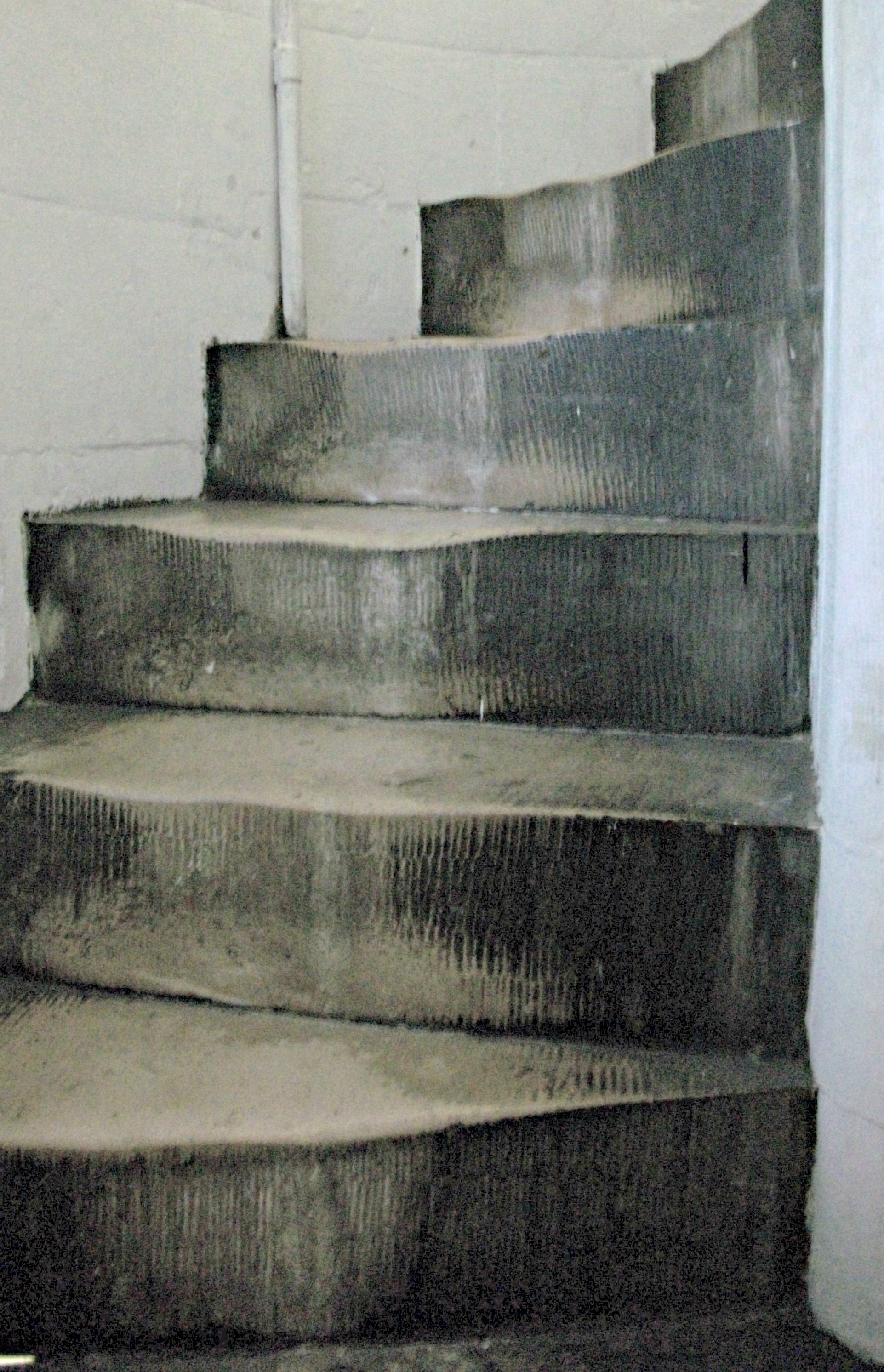
Old winding steps. Every foot that ever walked on these steps had a story to tell.

Bergen, Norway:

Another intriguing potential story–what’s up with all the doors opening into the air? Gotta watch that first step…

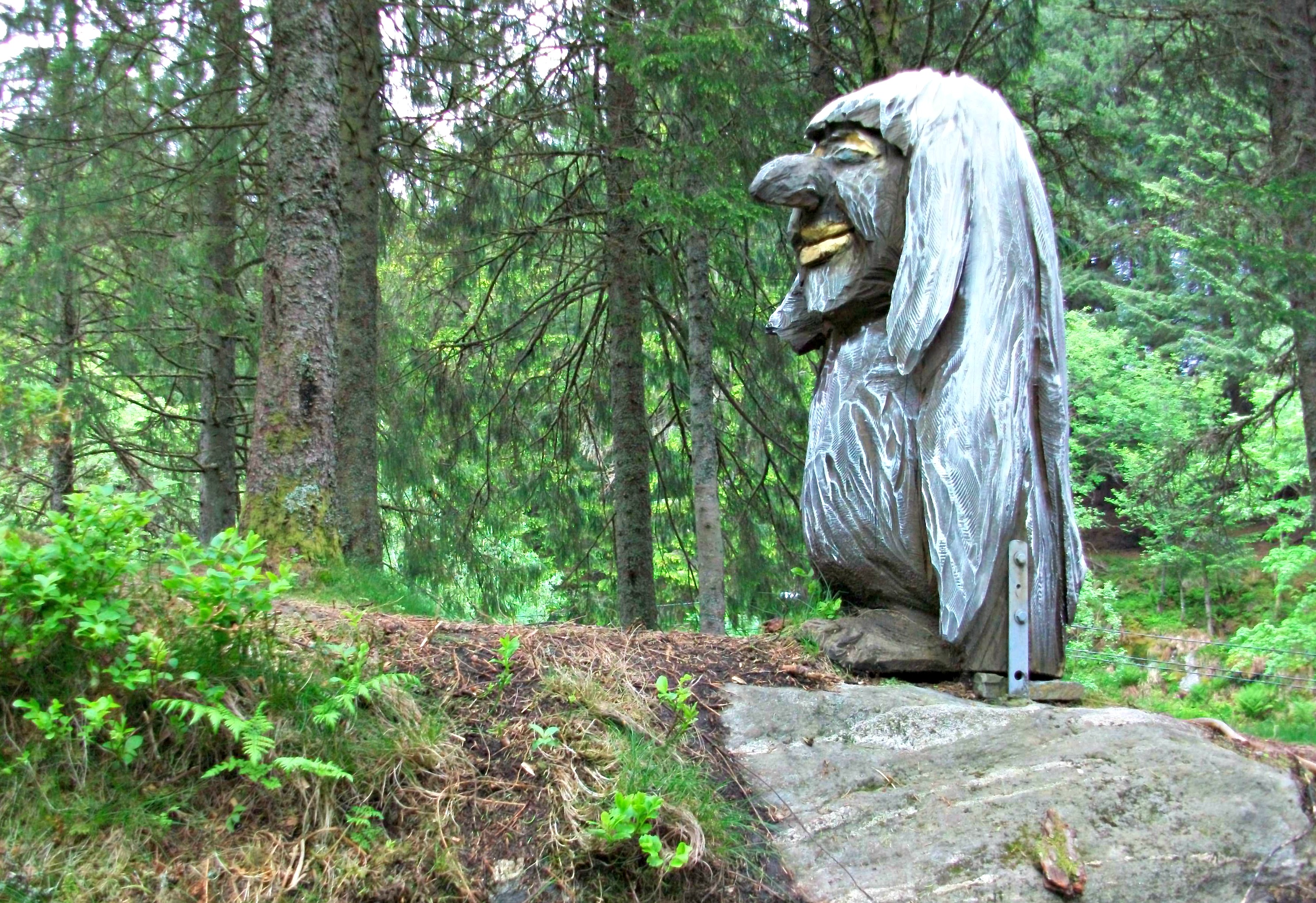
There be trolls in the forests of Norway!

I’d love to hear your thoughts! Has anyone else felt prompted or inspired by one little glimpse of something, or one picture or one incident? What stories do these pictures make you want to tell?

It’s all in your point of view…

I believe that point of view (POV) can make or break a story. Well, maybe not break it, necessarily, but a different point of view can radically change a story.

A couple of other writers have blogged recently about POV, so I must do them credit by providing links to their posts. One of my favorite bloggers Ava Jae posted an insightful blog about POV, and editor Beth Hill wrote an exhaustive and very educational three-part post about point of view and character perspective.

To begin with, POV is one of three things: first person, second person, or third person. Each one has their pros and cons.

First person: I tells the story. The reader can immediately get into the main character’s head—the reader sees, hears, and feels everything that the character does.

For an example, I’ll use Daphne Du Maurier’s classic Rebecca. The story begins with an intense first line that puts the reader right away into the mind of the unnamed narrator:

          Last night I dreamt I went to Manderley again.

A disadvantage (or perhaps advantage, depending on how you use it) is that first person POV can be limiting. If important events occur that the narrator does not witness, the information must be revealed in some other way or at some other point in the story.

As I said, this could be either good or not so good. In the case of Rebecca, for those of you who’ve read it, just think how different the story would have been if Max de Winter had been the one telling the story. Without giving away everything to people who haven’t read it, let’s just say that there would have been a whole lot less suspense and intrigue if the reader knew everything that Max de Winter knew.

I wrote a sci-fi story a few years ago (it’s been temporarily shelved, but I haven’t given up on it) that was written in the first person from the perspective of an alien. The plot involved the alien on her way to visit Earth for the first time, and her first encounter with a human.

I enjoyed being able to create and tell about the alien culture basically from the inside out. The interesting challenge to this, however, was describing humans and their culture from the point of view of someone who didn’t know what hair or tear ducts were, had never seen a yellow sun in the sky, and didn’t even have the words to describe the food that humans ate.

Second person: You tells the story. This POV is almost never used, and is rather awkward. Really the only example (good or bad) that I can think of that’s written in second person are the Choose Your Own Adventure books. Anybody remember reading those as a kid? Those were cool because you were actually in the story. But as for reading, say, an actual novel, you as the narrator makes for a difficult read.

Third person: He or she (or it or they) tells the story. This POV form has the most options, which, like most anything, could be either good or bad.

The story can be told from the perspective of just one character, making it similar to first person in that the reader has a limited view of the story but very intimate knowledge of the character, their thoughts and feelings, everything that they do and why.

Multiple characters can tell the story, giving the reader not only knowledge of simultaneous events, but sometimes different perspectives on the same event or character. This format works best, in my opinion, for long complicated stories like epic fantasy (and other genres too, of course) that involve a large cast of characters and multiple plot threads.

The book I’m working on falls into this category. While I have two characters who would be the absolute main main characters, I have a cast of five characters who share the job of telling the story.

I keep the scenes separate as far as character perspective goes, however. I don’t know if this is what might be called a “rule” of narration and POV, but keeping the narrating characters separate within a scene is usually advisable. The best multiple-perspective third person POV stories I’ve read have separate scenes, or even separate chapters, for each character’s viewpoint. Switching mid-scene (or worse, mid-paragraph) from one character’s head to another can often be jarring or confusing for the reader.

For an example of third person, I’ll use an excerpt of a scene from my current book. This scenes that involves two of my main characters (Mađen and Teija), but it’s told from the perspective of Mađen.

          The sun was rising as they neared Sodankylä. Mađen paused at the top of a hill for a moment to admire the view. The snow was just mere flurries now and the clouds were thin, and a red-gold glow was blazing on the horizon. Wild sweeping hills stretched in every direction, dotted with little pockets of trees and rapidly freezing lakes. Towers of rock, softened only slightly by the fresh dusting of snow, rose up from the tundra. Everything glowed a muted orange in the veiled sunrise.

          “It’s beautiful,” Teija said.

          “Sápmi. It’s always been the most beautiful thing to me.”

          “Sápmi?”

         “The land of the Sami children. You call it Lapland, or sometimes Samiland. But our ancestors called it home.”

         Home—a land of ice and reindeer, rich traditions and dying languages. And because of his stupidity, he’d almost let that life slide through his fingers and be lost to him—again. He belonged in the north with his reindeer and his family. Ávgos and their animals would be brought back safely, if it was the last thing he did. He gunned the engine and sped down the hill.

          He stopped briefly in Sodankylä for food and fuel. Teija was uncomplaining, though she did purchase a thicker scarf before they left the village. Mađen saw no evidence of pursuit of any sort, either in Sodankylä village or out on the tundra. During another pause in the late afternoon to stretch and relieve themselves, Mađen noticed Teija examining her phone.

          “You’re not calling anyone, are you?” he asked.

          She looked up at him. “How could I? There’s zero signal out here. My mom called me earlier and my friend texted me, but I can’t reply to either one.”

         “Are you planning to tell them where you are?”

         “Johanna knows where I am—basically. Well, she knows I’ve gone to Lapland. Why? You seem really concerned about me communicating with anyone.”

         Mađen pursed his lips and tried to think of a good way to answer that. “I just don’t want anyone to think I’ve kidnapped you.”

Along similar lines in the third person POV is the omniscient narrator, which is basically just the author telling the story. Scenes and characters are all treated equally, and if the thoughts of any characters are discussed, the reader is informed of them by the author rather than having the characters themselves share.

A good example of this is in Beatrix Potter’s stories; the author is the narrator, and in The Tailor of Gloucester, for example, this omniscient narrator tells us what is going on with the characters of the tailor, Simpkin the cat, and the mice. These stories are of course children’s books, and this omniscient narrator form is more common in children’s stories (it was also the most common POV form used about 100 years ago, when Beatrix Potter began writing).

It’s rare, though not impossible, of course, for a story to mix POV forms. One book that accomplishes this mixing quite well is The Dreaming: Walks through Mist by Kim Murphy. There are three main characters who tell the story—two of them tell it in third person, and one in first person. Each POV and perspective is given its own chapter, with a heading featuring the name of the character. This is a great way to prepare the reader for not only the change in perspective, as the third person narration switches between Shae and Lee, but also for the dramatic shift when the first person I narrator Phoebe tells her part of the story.

Regardless of the point of view, or the viewpoint character(s) used, the reader can only know what the author chooses to tell. That’s why I mentioned at the beginning that POV and character perspective can radically alter a story.

For writers out there, do you have a favorite POV that you write in, or do you let the story and characters determine the narrative perspective? For readers, who do you like to have telling the story: first or third person, omniscient narrator or just one or two characters? Please share your thoughts!

So What About Maps in Novels?

I like maps. To me, a map adds a level of realism to a place, cementing it in my mind in a unique way—even if it’s a map of a place that I already know well.

I don’t often drive with a GPS. Usually (but not always), if I can study a map of the route ahead of time, and maybe have written down a couple of landmarks like a noteworthy building or an exit number, I’m good to go. And once I’ve driven or walked a route two or three times, I pretty much have a map of it in my head.

For me, maps in books serve the same function. The map adds a dimension to the places in the book, and helps to frame the characters as they interact within that space. I’ve read a few blog posts about maps in novels (if I could remember which blogs, I’d link to them). There seems to be a bit of a divide as to whether people like maps in their novels or think them unnecessary fluff. Apparently, there are some literary critics who consider a map to be a “crutch” of sorts, useful only to writers who can’t convey setting properly or to readers with no imagination.

Personally, I’ve never encountered anyone who thought that way. But if you are of that opinion of maps in books, then I do apologize if I offended. No offense is meant towards anyone—this blog is, quite obviously, my own opinion; feel free to stop reading at this point, if you so desire.

For those who have kept on reading, I will continue to express my opinion and my love of maps. Yes, I’m partial to maps in books because I’m a lover of fantasy stories—and fantasy, more so than most other genres, lends itself to needing maps because the location is a place that absolutely no one (besides the author) is already familiar with.

If you’ve read any of Tolkien’s stuff, you were probably glad to have a map so that you could track Frodo’s journey across Middle-Earth, and find out where Minas Tirith and Minas Morgul actually were in relation to each other.

Or, take the Bone series by Jeff Smith (yes, I know this is technically a graphic novel—more on that in another post). A map, as drawn by one of the characters, is a very important plot point, in addition to the map helping the reader to understand the importance of the fact that Barrelhaven is nowhere near The Dragon’s Stair.

Maps don’t have to be relegated to fantasy, certainly. Most any story that involves traveling in some fashion, or that takes place in a distant or little-known place can at least be enhanced by a map. In Andrea Barrett’s The Voyage of the Narwhal, there is a detailed map of the west coast of Greenland and all of the nearby islands in the Canadian arctic. The book is a historical fiction tale about a sailing ship that travels through the dangerous waters of the high arctic; not the most well-known part of the world, especially when the 19th century names for places are used, so a map helps.

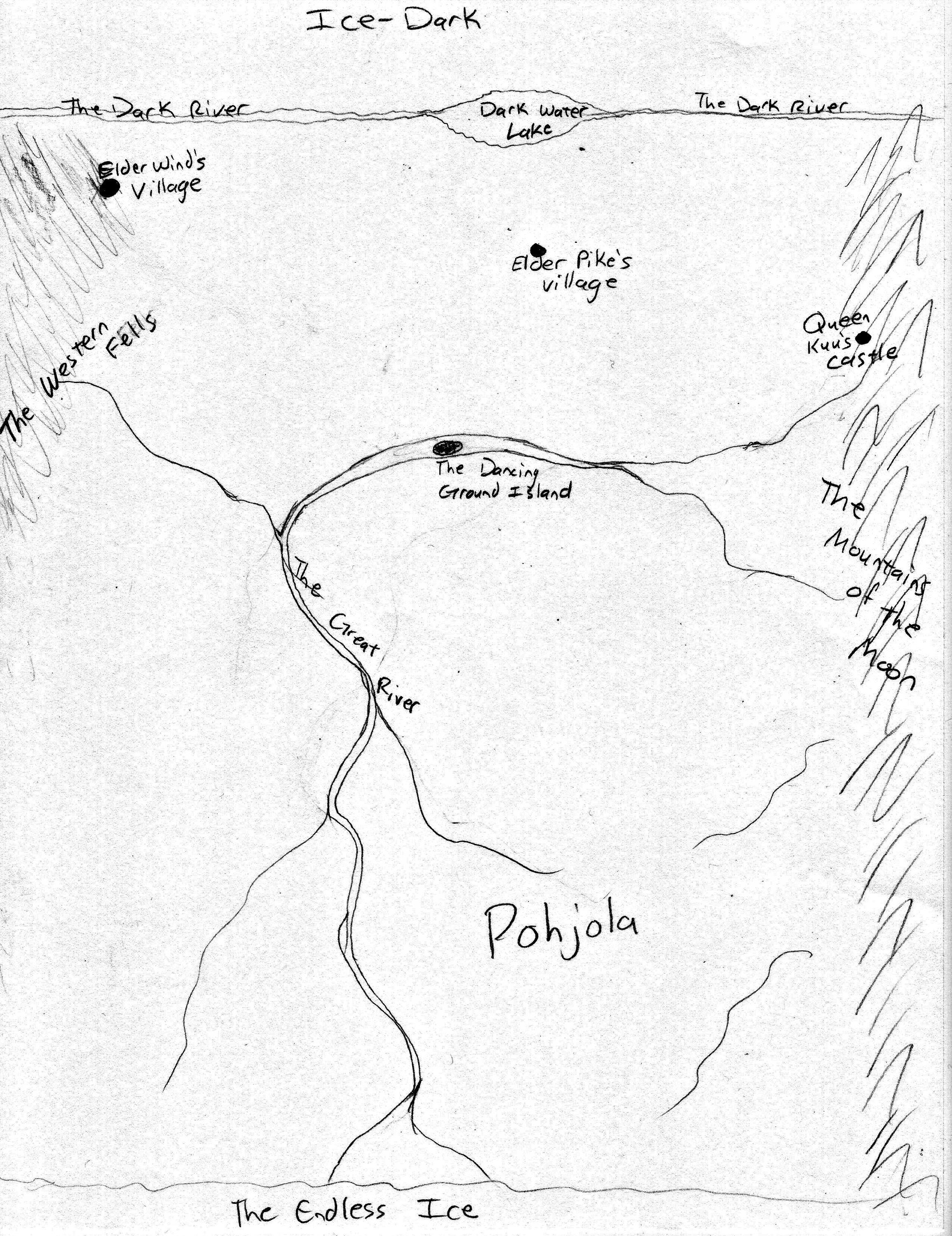
And so, since I’ve been singing the praises of maps this whole time, it seems only fair that I should provide one of my own maps. I’m not an artist, or a cartographer, and so I may have to engage the help of some skilled person for the final version—but here is a rough map of the land of Pohjola. The characters actually spend a good portion of the book traveling, so I quickly realized that some of my readers might appreciate a map. And even though I had the map of their journey all vivid in my head, it helped me to have it drawn out.

I’d love to hear your thoughts! Any other map lovers out there? Map-haters?

Comments, tweets, and Facebook posts are welcome. 🙂