What Not to Say to a Writer

I am not a published author yet (as of the time of this writing), and I may not be as experienced as many writers, but thus far in my writing journey I have encountered well-meaning people who say some really not-so-great things.

Writing can be not only a lonely pursuit, but an odd one. Let’s face it: we walk around with whole worlds in our heads, every horrible or bizarre thing we see would work great in a story, and we struggle with choosing between two different words that actually mean the same thing. So I guess it’s no wonder that a) most regular people don’t understand us, and b) because of that, questions that would otherwise be polite or innocuous are not viewed that way by us.

Whether you’re a professional writer, or you’re just getting started and have told more than two people that you’re working on a book, I’d be willing to bet that you’ve heard at least one of these comments from someone. And if the comment didn’t annoy you or confuse you, then just wait.

Please note: I mean no offense to anyone reading this who isn’t a writer, nor any offense towards well-meaning family and friends of writers. My purpose here is to shamelessly elicit sympathy from other writers help non-writers to understand where we’re coming from.

How’s your book coming? (Or, when can I read your book?) When I’m able to answer this question with “The first shipment of my new book should be here next week,” I probably won’t mind answering this. But otherwise, this question really bugs me, and here’s why: no matter how much writing I’ve done lately or how well a project is going, I’m always thinking I ought to be farther along at this point and that the writing could be better quality. I’ve taken to answering the “when can I read your book” question with “when it’s finished.” And then when they ask when that will be, I repeat “when it’s finished.” Yes, I have some specific goals set for the stories I’m writing, but I don’t feel like telling people “I plan to be finished with draft three of chapter four of book one by next month.”

I wish I had time to write a book. So do I. So do all writers, probably. Nobody really has time to write a book. Those who want to write make the time. It’s not easy. Everyone is busy with jobs, kids, daily life. But writers figure out how to carve out time and write. If you want to write badly enough, you can do that, too.

My mom/brother/neighbor’s cousin wrote/published a book. You should talk to them! I love connecting with writers of all experience levels, and I believe there’s something I can learn from anyone.  The mom/brother/neighbor’s cousin is probably a great person and fine writer, but usually when I get this comment from a friend (or a stranger), the person talking can’t remember the name of the book, has no idea whether the author is self-published or traditionally published, and doesn’t know if said author is working on anything new. I appreciate the thought and wish the author all the best, but I don’t think I need to spend time figuring out if the published work is a series of main-stream novels or a church cookbook.

How do you write something that long? I can’t even write a short story. (I get this one a lot because I write epic fantasy. You might get some variation of this comment depending on what your format or genre is). When I bother answering this question, I usually laugh and say that I struggle to write something short (which is true). Then they laugh, and have no idea what to say next. I’m working on some short stories right now, in addition to a novel, but the two are totally different animals. Writing a novel is not just taking a short story and adding 40,000 words to it. I write long stuff because that’s what I like and what I’m good at.

Where do you get your ideas? This one annoys me the most. It’s not the fault of the person asking the question – they’re genuinely impressed by my creativity, and I should be flattered. But when this comes as a question, I truly don’t know how to answer it. I don’t go out searching for ideas – they come to me. Whether I want them to or not. I do understand that some writers need more prompts and inspiration than others, and then of course there’s writer’s block in all its forms. But my ideas usually come unbidden and at random times. Driving at night, I see a lamp post and get an idea for a story. A line of a song leads to an unrelated thought, and then there’s the seed of a story idea. I read a book, and that kicks my creativity into overdrive. If you’re looking for my secret idea formula, I don’t have one.

What other “please don’t ever say that to a writer” questions or comments have you encountered?

My First Writers’ Conference

This past weekend I attended the James River Writers Conference. It was a weekend-long event, but I was able to attend only on Sunday. Even so, this one day was enough for me to learn, get encouraged, and whet my appetite for other writers’ conferences in the future.

The event that I think I learned the most from was the First Pages workshop. During First Pages, selected works were read aloud – but only the first page. The panel of agents and editors then gave their feedback on what worked and what didn’t. I took a lot of notes. I want to be able to hook my readers right from the first page!

I think I enjoyed the Plotters versus Pantser panel the most. Four authors shared their writing techniques, and whether they tend to plot out a story in detail beforehand, or just write from the seat of their pants. The answers were actually mixed from all four authors. It seems like even the best pantser needs to have an outline and story structure going in, and the most die-hard plotter needs to leave room for creativity and organic storytelling. This was refreshing to me, since I call myself a plotter but often find that my outlines are woefully incomplete.

All in all, I had a great time at the conference. Even though I attend other smaller James River Writers events throughout the year, it was encouraging to see so many writers from so many different places all together. Published or still amateurs, fantasy writers and essayists – at the heart, we are all writers, and were there for the common purpose of improving our craft.

I will definitely go back next year, and I also look forward to attending some other writers’ conferences in other places very soon!

An artist illustrated the First Pages workshop. Fascinating idea, and so talented!

An artist illustrated the First Pages workshop. Fascinating idea, and so talented!


Why I’m not Doing NaNoWriMo

If you hang around the creative writing world at all, then you know that October is NaNoWriMo prep month – that is, the time to prepare for November, which is National Novel Writing Month (NaNoWriMo).

I’ve done NaNo before (let’s not talk about my pathetic word count). Earlier this year I was looking forward to doing NaNo again and at least bettering my word count for the month, if not actually “winning” (that is, writing 50,000 words in a month). But as the fall approached, I realized that perhaps I’d be better off not doing it.

My writing load has greatly increased over the last few months. Here’s a brief rundown of what I’m currently working on:

     Editing/rewriting novel #1 of a trilogy

     Writing first draft of novel #2 of same trilogy

     Writing weekly posts for my blog

     Writing 10-15 posts a month for my job

     Working on three short stories that I hope to have published by the end of the year

I’m not saying all this to brag about my writing endeavors (though I am excited about and thankful for the paid writing opportunities that have come my way recently).

I’m also aware that this laundry list of activities could sound like nothing more than excuses. Hey, we’re all busy: jobs, families, holidays, general life. Nobody has extra time lying around in November to devote to NaNoWriMo. If you want to do it, you have to make the time to do it.

I could make the time to do NaNo. I even have a story idea that just needs a little thought and outlining, and it would be ready to go for November. Even though I have a busy schedule, (and two other jobs besides the job I write for), I know I could make the time. I’m just not sure my brain could handle it.

My focus is spread thinner than I’d like right now. I’ve developed a weekly writing schedule for myself, so that I don’t try to write for everything every day. Switching between so many different subjects and styles of writing on a regular basis can easily sap my creativity and mental energy. I’m sure there are plenty of writers out there who manage the constant switching just fine, but since this is all rather new to me, I don’t want to put any unnecessary stress on my poor amateur brain.

I look forward to participating next year. I don’t know what my personal and professional writing life will be like in a year, but I want to be able to fit NaNoWriMo into my schedule and my mind by then. In the meantime, I will enjoy the writing that I’m currently doing, and will use this experience to become more disciplined with my mind and my schedule.

I love NaNoWriMo and everything it represents: getting people excited about writing, creating a sense of community for an otherwise solitary activity, a great platform for setting and tracking goals. Whether you’re a published author or you’ve never written a thing since your last essay in high school, I think participating in NaNoWriMo is a fun and inspiring thing to do.

So to all you WriMos for 2014 – go write!

Story Prompts

Some people ask me how I come up with ideas for my stories. The answer is: I don’t. the ideas come to me, frequently when I’m not expecting it or looking for an idea.

I know that some writers struggle a bit more with the initial idea for a story. And even the most abundantly creative person can hit a dry spell (which has happened to me before). Some people just want to try their hand at something new – a new idea, a new genre, a new style of writing.

Enter the story prompt. A picture, a word, a phrase – all of these can prompt an idea. My intent with this post is to give a boost to a fellow writer, to get you over that hump if your creative juices have run dry. A story prompt can also be very useful if you’re new at writing, if you want to tell a story but you don’t know what to write about or where to begin.

A note: most of these story prompts have a fantasy slant, because that what I write. A prompt, though, is just that – the seed of an idea, intended to prompt you to think on it and develop it. A picture of a dragon does not have to prompt a fantasy tale, just as a picture of a happy modern couple in a sports car does not have to prompt a contemporary romance.

Here are some ideas:

The famous artist who says that his pet dragon actually does the art

A lonely basilisk

A boy and his best friend, a cloud

Demons swim in all the sacred places

It was two days before Christmas when the spaceships landed outside of town.

As the choke of midnight comes, the trees grow and the darkness begins to cry.

In that silent future after the world has ended, a child is born.

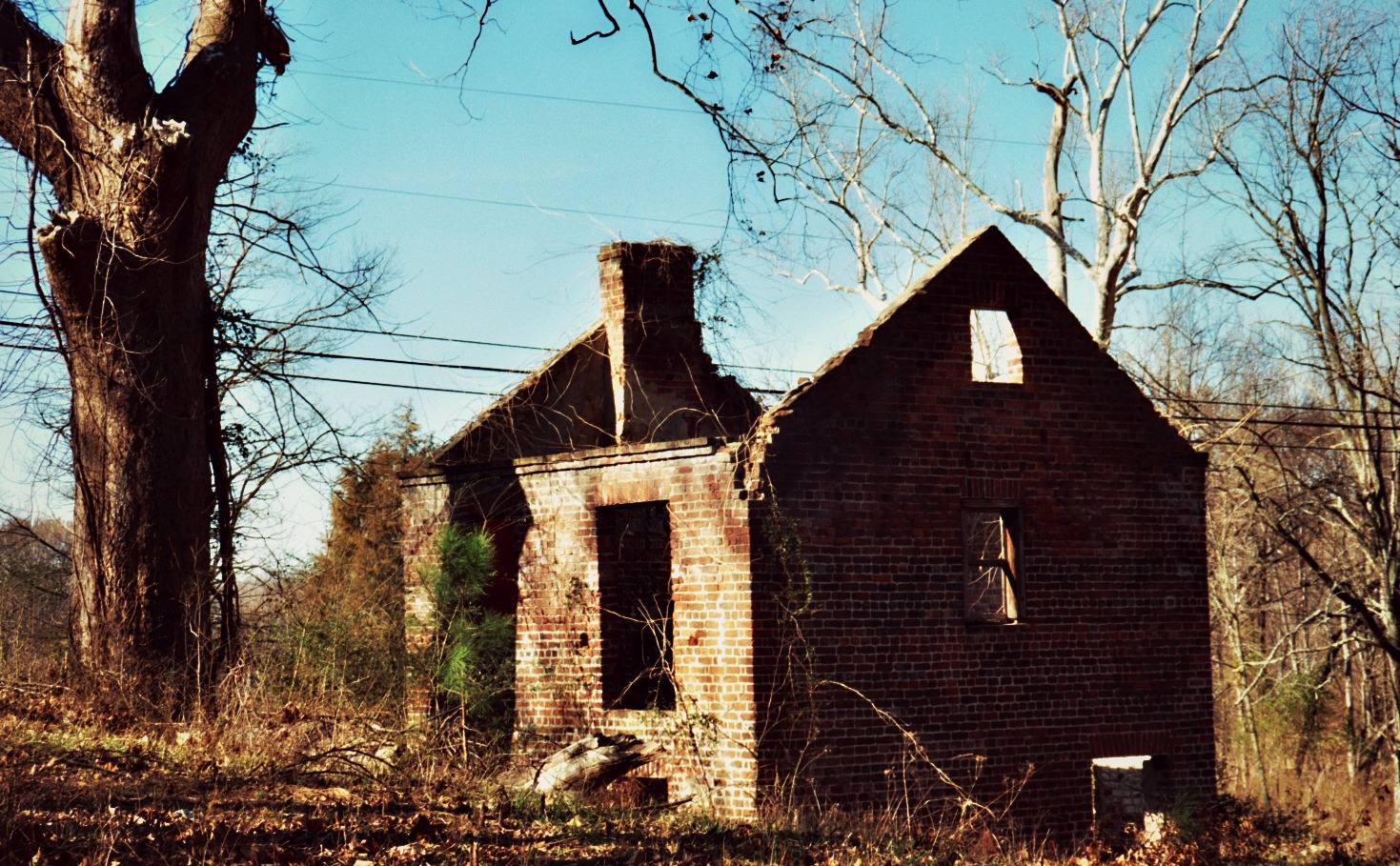
Where is this place? What happened here?

Where is this place? What happened here?

Now go write!

Revisiting a Forgotten World

Writing Updates

I’m still working on my fantasy trilogy that has been my writing project for a couple of years now. But lately I’ve been thinking a lot about some stories I wrote and a world I created many years ago. I don’t want to neglect my time spent on my current projects, but I also want to make some time to revive this older set of stories. Those stories were the ones that got me to where I am today.

Birth

This fantasy world of these old stories was my first foray into epic fantasy – I created a complex world, dozens of characters, and enough of a history and timeline to cover several novels. Initially it didn’t start out with all those elaborate details – it began as just one book, and the story was a rather obvious copy of The Lion, The Witch, and the Wardrobe.

I wrote it in fifth grade, and it was probably barely 20,000 words (I don’t have a word count, since the story was hand written in pencil on notebook paper). Still, not a bad middle-grade “novel,” I suppose – and it was the longest story I had ever written and completed to that point. It spawned a two-part sequel, part one of which I wrote in middle school. Then for a while I left that world behind in favor of Star Wars fan-fiction, a lengthy story about horses on a magical island, and other assorted short stories.

Revisit

I revisited this world sometime in high school, with some fresh ideas and a slightly more mature command of writing and storytelling techniques. I wrote another novel which was intended to be a prequel to the one I’d written in elementary school, and I made plans to re-write that one.

The world was becoming more complex: I crafted different races and cultures, deities and religions, history and geography. I planned out a seven-book saga, even though one novel (and one and a half MG novelettes) is all I had written at the time.

In my college and post-college years I moved away from that world again, launching a new fantasy series, amid more short stories and some pitiful attempts at poetry. But even with all the school assignments, Shiny New Ideas, and other creative projects, I never forgot my first fantasy world that I built.

Revive

And now, even though I’m deep in the middle of something else, I’m feeling a burn to go back to this ancient world that has lain quiet and patient for so long. It requires another revamp – a bigger overhaul than just rewriting a childhood story. Change of format, change of storytelling structure, some changes to the timeline of history that I had created.

But the bones of the world are still there. I spent collectively years creating the complex societies of the centaurs, and the religion of the elves. I came up with detailed descriptions and biologies of several species of dragons, and a magical treasure that managed to make it through all the different versions of the world.

Even though I’m not fond of editing and rewriting, this revisiting is not the same thing: it’s a foundation, dusty but firm, that I can use to build on anew. Editing, revising, and rewriting will come much later, once I’ve got some new stories. But for now, I’m excited to be once again exploring a world that was my first love, in a sense. Let’s see where the stories take me this time.

Please share with me! Have you ever done a complete overhaul of a story idea, keeping it the same yet creating something new? Do you have a story or idea that’s stuck with you for years?