The Best Social Media Sites for Writers


“Writers need to be on social media!” everyone says. I agree. You don’t have to be a social media expert, or spend 24/7 connected to your Facebook and Twitter apps, but you should have an online presence. A website is a good start, but if you want

to develop a fan base, the best way to do that is to be accessible. And social media provides the perfect venue for you to connect directly with your fans.

Here are some of my favorite social media sites that I believe are the best-suited to authors:

Facebook

Yep, Facebook is the big dog of social media. And despite its constantly-changing algorithms, and young millennials flocking away from it because their parents just signed up, Continue reading

5 Pinterest Tips for Writers

I wrote a post not long ago about using Pinterest and how it can help you as a writer to organize ideas and research. If you’re not familiar with Pinterest, then this post is a good introduction to the picture pinboard concept of Pinterest.

If you already use Pinterest (or are interested in getting started), here are 5 quick tips about how you can use this site to boost your writing or market your books.

Pin pictures from your blog or website

This is probably the most important one for increasing your online exposure and boosting traffic to your website. If you have pictures on your website and blog posts, then when people find those images on Pinterest, there will be the automatic link back to your website. Have you ever found a cool new website because you followed a link on a pin? Well, others can find your website the same way!

Use secret boards for research and ideas 

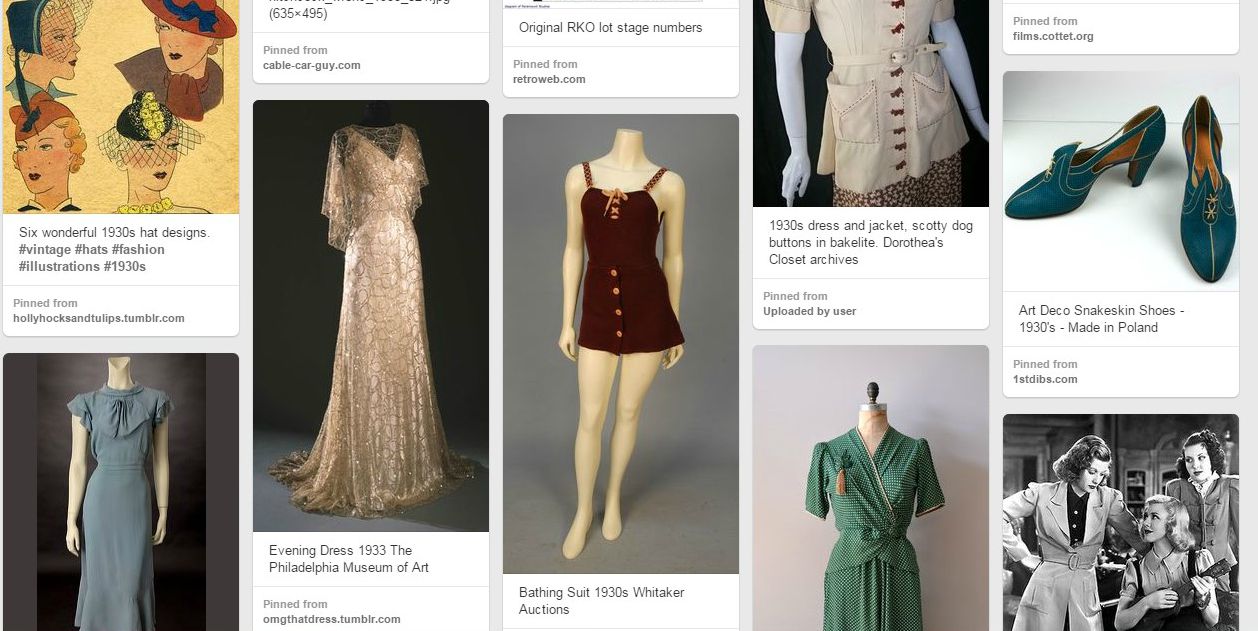
This is from my secret board for a 1930s historical fiction story I'm working on. This is all you will see of this board till much later!

This is from my secret board for a 1930s historical fiction story I’m working on. This is all you will see of this board till much later!

Do you have a place where you collect images and links for inspiration? Pinterest offers something called “secret boards” that only you can see, so you can now create boards for research or WIPs (works in progress) without making everything public. When the time is right, you can make the secret board public if you want, or transfer some of the pins to a public board.


Have a board (or several) for your books or other writings

If you’ve published a book (or even articles on other website or blogs) you can pin these. Pin your book cover from Amazon – then the link will take users right to your book. If you’re working on a project that you do want to share with the world, then a Pinterest board of your research and inspiration will help you gain followers and fans even before the book is out.

Have a board (or several) for stuff besides your writing 

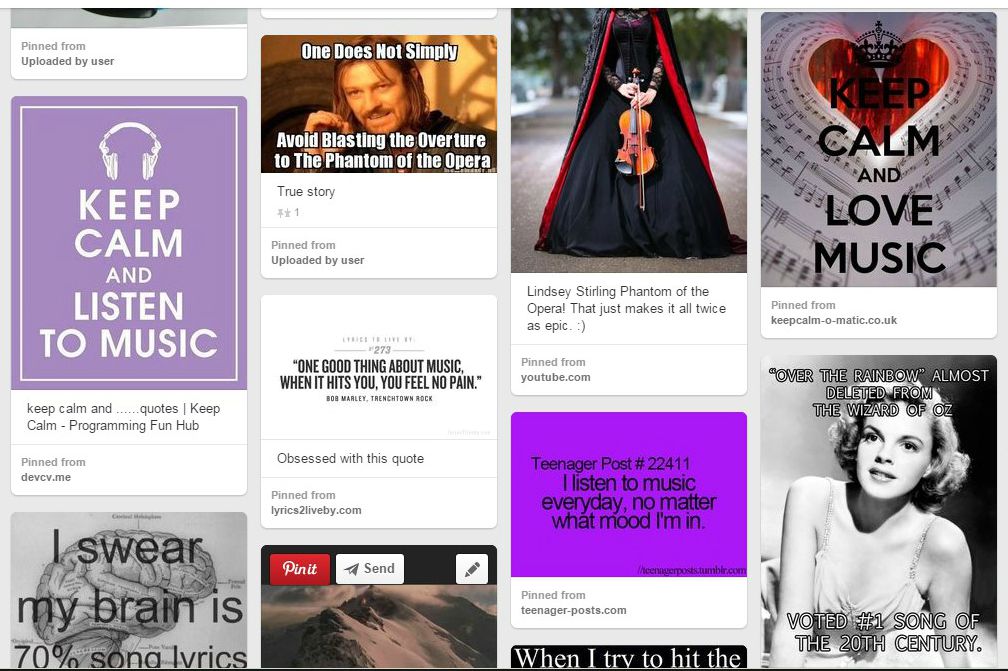
I love music. Music often finds its way into my writing, but I have a general music-ish board that's not specifically related to my story ideas.

I love music. Music often finds its way into my writing, but I have a general music-ish board that’s not specifically related to my story ideas.

Your fans want to get to know you as a person. They may love the gritty thrillers that you write (and they follow all of your related pinboards), but they’d probably also like to know that you love dogs and that you enjoy hiking.

There’s nothing wrong with having non-writing boards, as long as it’s part of the public image that you want to share.

Make sure your profile is up-to-date

This goes for any social media. Make sure your profile picture on Pinterest matches your profile picture on your Facebook fan page and your picture on your website. On Pinterest, profiles are pretty bare-bones, but there is space for links to Facebook, Twitter, and a website. If you have any of those, make sure you link them to your Pinterest account – and then make sure that you keep all of those profiles clean and up-to-date. Nobody wants to track down their favorite author online only to discover that said author hasn’t tweeted in two years or hasn’t gotten around to listing their newest book on their website.

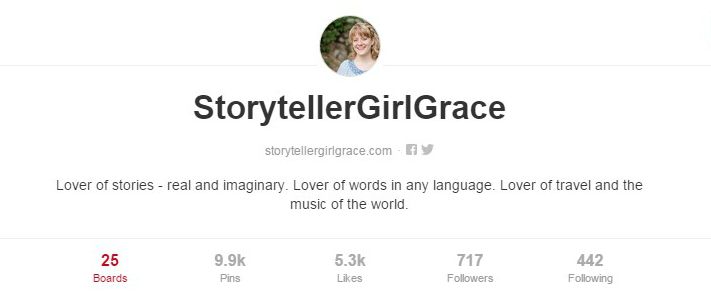
My Pinterest profile page. Simple but effective.

My Pinterest profile page. Simple but effective.

Do you use Pinterest for your writing? What’s your favorite thing about Pinterest?

On Writers Conferences and Book Fairs

Recently I went to North Carolina for a book fair. I had a wonderful time, met some great people, and came back with books, business cards, and a wealth of information.

I decided not to make this post a conference review, but rather just share some things that I’ve learned about writers’ conferences, workshops, and book fairs.

Note: I’ve never participated in a conference or event from the vendor’s side (yet) – so far I’ve only been an attendee. But since a bookish event should be, ideally, designed for the attendees, I can comment on the things that are appealing and done well, and the things that could use some work.

Bring business cards. Whether you’re an author selling books, an agent, a publisher, or just an amateur writer checking it all out for the first time, business cards are a must. You’re going to meet some people you want to stay in touch with, or an author or agent you want to follow up with later. And scribbling names and emails on random pieces of paper is just awkward. If for some reason you don’t bring business cards, at least have bookmarks to advertise your book, or flyers for your company, or something. At one event I stopped at an author’s table and she told me she hadn’t bothered to bring business cards. She had no bookmarks or anything else, either. I didn’t buy a book right then, and do you think I remembered her name long enough to go home and look her up on Amazon or GoodReads? Nope.

Don’t be embarrassed to set up a table even if you have only one book. There are plenty of prolific authors who have to bring just a selection of their stuff to an event, because they have too many titles to fit on a table. But don’t be intimidated by them if you have only one book out so far. I’ve bought just as many books from authors with full series laid out on the table as I have bought from writers selling just one title. Be friendly, have a professional-looking book (and bookmarks or business cards), and have fun.

Be on social media. And have a decent-looking website. Really, this point should be a post all to itself, but I’ll save that for later. The point is that if you’re a writer, an agent, a publisher, an editor, or an illustrator, you need to be represented online. I understand that not everyone is a social media nerd like me, or has the know-how to create a fancy website. But basic blog templates are free, as are Facebook and Twitter. At one book event, I spent some time speaking with a representative from a small publisher. He had a good sampling of books on the table, and he had business cards. However, when I went to the website I found it visually very hard to read because of the design; also, there were several broken links, and no social media links at all. I’m sure it’s a great publisher, but I will not be submitting my manuscript to a company that is still using a website design from 1998 and isn’t on Facebook. It’s not that I’m a social media snob – it’s just that I expect professionals in the writing industry to at least try to keep up with the current trends of said industry.

Another note: With all of these points, good and bad, I am not referring specifically to the event I just attended in NC. These are observations gained from my (admittedly limited) experience of attending bookish and writerly events in general. I also didn’t name any names because a) I want to be polite and protect people’s identity, and b) I’m not that great with names so I’d probably get it wrong if I linked a name to a specific point.

Anyway. Have you attended a writers’ conference or book event of any sort? Do you have any comments or observations to add to this list? Please share!

So you Want to be a Social Media Expert?

I wrote this post for the blog at Helps2, the social media company that I work for. You can view the original post here.

Social media manager. Content creator. Platform consultant. Growth hacker. Yes, this is a thing now.

Ten years ago, social media as we know it today didn’t exist at all. So is there such a thing as an “expert” in a field that is not only brand new, but is changing on a daily basis? And if you’re not Mark Zuckerberg or a Google employee, can you actually become one of these people?

Yes, you can. While I may not be considered an “expert,” as compared to the real pros, I have learned a thing or two about the social media world and how to stand above the crowd. I’m still learning, growing, practicing, and adjusting, but I will share a few tips that can help you move out of the “newbie” realm and on towards “expert.”

It’s okay to try all the platforms till you find your niche. If you’re just starting out with social media, especially if you’re wanting to use it to represent and promote your career, business, organization, or other pursuit, just experiment. There are the big social media platforms – Facebook, Twitter, Pinterest, Tumblr, etc – but there are dozens (no – probably hundreds) of others, too. Some platforms suit a specific niche or industry – like Flickr for photography, for example. Don’t be shy about trying a lot of social media sites for a little while so that you can narrow down your list of favorites where you want to focus your efforts. This not only lets you find the sites that you enjoy and where you can reach your audience, but it gives you experience with many different platforms. Knowledge and experience are part of becoming an expert.

Interaction is key. Social media is all about being social. If you don’t interact with your fans/followers/clients, they will be less inclined to follow you or to seek you out when they need your product, service, or advice. The ways of connecting with other users differs from platform to platform, but again, this is where experimentation can help you. Making the effort to learn how to communicate effectively on social media – whether it’s comment strings on Facebook or retweets on Twitter – helps you to stand out.

Study the pros. The old adage is true – find someone who has what you want in life, and learn what they did to achieve it. Most social media professionals share much of their knowledge freely through blogs, podcasts, and the like. Read articles about social media tips. Find people who you respect who are doing it right (whether they are social media professionals, or just using social media effectively). Interact with them, ask questions, read blogs. Also know that no matter how much you might learn about social media, because of its very nature, there’s always something new to learn. You don’t have to keep up with every single trend, but develop a passion for constant study.

Be consistent! Consistency is the glue that holds this all together, and in my opinion is one of the main ingredients in the making of an “expert.” No one wants an “on again, off again” professional in any field. Be consistent with your learning – social media changes every day, both from a technological side and in the way people are using it. Be consistent with your own social media, whether you have just a personal Facebook page or you’re managing a website and a presence on five other platforms. Be consistent with your updates and with your interactions. If you want to be on the road to “expert” status, then people need to see that you have both the knowledge and the discipline to keep going over the long haul.

So there you have it. These tips are things that I myself have done (and continue to do. Consistency, remember?) Whether I’m truly an expert or not isn’t important, really. I’m learning, applying what I learn, enjoying what I do, and becoming more effective every day. And you can do it, too!

What The Wizard of Oz can teach us about Social Media

We have been singing along with “Somewhere over the Rainbow” for a lot longer than social media has been around. The Scarecrow, the Wicked Witch, and the ruby slippers were cultural icons long before Mark Zuckerberg went to college and launched Facebook. And L. Frank Baum first penned those memorable stories even longer ago. So what is it about this magical children’s tale that relates to our modern Internet-driven lives?

Social media takes brains

Not a lot, mind you. You don’t have to be a Rhodes scholar to manage a Facebook page or send out some tweets. But there is a learning curve – new technologies, new ways of doing things, learning the value of keywords and hashtags. But mostly, effective social media requires that you be intentional, consistent, and (relatively) polite. These are the sort of smarts that everyone has. If the Scarecrow could figure out how to get Dorothy to the Wizard, then you can manage a basic blog or Facebook page.

Social media takes heart

The most effective people – in life, not only in social media – are the ones who are passionate about what they’re doing. If you’re excited about a cause, a career pursuit, or any other subject matter, then let that excitement come through in your online posts. Genuine enthusiasm goes a long way. Keep your dreams and passions always in mind. And so if, like the Tin Man, you get slowed down by a little rust, your heart – and the hearts of your dedicated followers – will pull you through.

Social media takes courage

It can be intimidating to post things about yourself and your life online for the world to see (let’s not go overboard the other way, though, with posting too many details). If you’re sharing your photos, your product, or your words with the world, you open yourself up to the good, the bad, and the ugly of feedback and interaction. Managing all your profiles and maintaining a thick skin might make you want to turn around and jump through an Emerald City window like the Cowardly Lion. But just keep pushing through and you can do it!

Social media is about friendship

Those who are most effective with building a following (and/or selling their books, products, or service) are friendly. Support, teamwork, give-and-take, and love are the building blocks of good relationships – both on and off line.

Now go start in your own backyard!

If you’re just starting out with using social media for the purpose of building a platform or making a name for yourself, it’s okay to start small. Start networking with the people you already know, the professionals in your industry who you already follow, or local organizations who can help you.

See? Basic social media competency doesn’t have to be that hard – everyone has it in them! Just put on your ruby slippers and go start your adventure!